The main difference between call and put options lies in market direction and payoff. Call options benefit from rising prices, while put options profit from falling prices. Payoff diagrams visually show potential gains and losses, helping traders understand risk and reward before entering a position.
Options Trading Basics
Options trading allows investors to buy or sell the right to trade an underlying asset at a specific price before a certain date. It provides flexibility, hedging opportunities, and ways to earn income or manage risk across various market conditions.
Options Definition And Purpose
Options are financial contracts that grant the holder the right, but not the obligation, to buy or sell an asset at a set price within a time frame. They serve to hedge risks, speculate on price movements, or generate additional income through premiums.
Types Of Options: Call And Put
The main types of options are call and put. A call option gives the right to buy an asset at a specific price, while a put option gives the right to sell. These contracts help traders profit from rising or falling prices and manage risks efficiently.
- Call Option: A call option allows the holder to buy an asset at a fixed price before expiry. It is used when expecting prices to rise, offering profit potential with limited upfront investment.
- Put Option: A put option gives the holder the right to sell an asset at a set price. It’s ideal in falling markets, offering downside protection or speculative profit if the asset’s value drops below the strike price.
Importance Of Understanding Call And Put Options
The main importance of understanding call and put options lies in making informed trading decisions. These tools help manage risk, protect investments, and capture opportunities in rising or falling markets. Clear knowledge supports better strategy building, improves returns, and avoids costly mistakes for investors.
- Risk Management: Understanding options allows traders to hedge against potential losses. Calls and puts help protect portfolios from adverse price movements, offering control during volatile markets and helping preserve invested capital through strategic positioning.
- Profit Opportunities: Knowledge of options enables investors to profit from both rising and falling markets. While calls benefit from upward trends, puts generate returns in declining markets, allowing flexibility to capitalize on diverse market scenarios.
- Strategic Flexibility: With clear understanding, traders can build various strategies such as spreads, straddles, and protective puts. This flexibility helps tailor trades to market outlooks, risk appetite, and investment goals with precision and control.
- Cost Efficiency: Options provide exposure to large quantities of stock with lower capital than direct ownership. Knowing how they work allows investors to control positions cost-effectively, optimizing returns without committing excessive funds upfront.
- Avoiding Mistakes: Misusing options can lead to rapid losses. Proper understanding helps avoid common errors like over-leveraging, misjudging expiration, or choosing unsuitable strike prices, ensuring trades align with goals and risk tolerance.
Role In Hedging And Speculation
The main role of options in hedging and speculation lies in their ability to manage risk and seek profits. Hedgers use them to protect portfolios from adverse price moves, while speculators aim to benefit from market direction changes using limited capital and strategic planning.
- Hedging: Investors use options to limit downside risk in portfolios. Buying put options protects against falling stock prices, acting as insurance by offsetting potential losses, especially during volatile markets or uncertain economic conditions.
- Speculation: Traders speculate on price movements with call or put options. With limited upfront cost, they aim to profit from market direction without owning the underlying asset, benefiting from leverage while managing defined risk.
Relevance In The Indian Financial Market
Options trading is gaining popularity in India due to increasing retail participation and market awareness. With instruments like Nifty and Bank Nifty options, traders use them for hedging, speculation, and income generation.
The derivatives market in India is well-regulated by SEBI, ensuring transparency and investor protection. Options help investors manage portfolio risk effectively in a volatile market environment while also allowing strategic exposure to index and stock movements.
Understanding Call Options
A call option is a financial contract giving the buyer the right to buy a stock at a fixed price within a specified time. The seller receives a premium for taking on the obligation to sell if exercised.
Call options are widely used for both speculation and risk management. They allow investors to benefit from rising prices without full ownership, making them cost-efficient and flexible tools in various trading strategies.
Call Option Definition And Mechanics
A call option allows the buyer to purchase an asset at a predetermined strike price before or on the expiry date. It includes key elements like premium, strike price, expiration, and underlying asset.
The buyer profits when the asset’s price rises above the strike price plus premium. The seller profits when the price remains below the strike, retaining the premium without having to deliver the asset.
When To Use Call Options
Call options are best used when you expect the stock or index to rise. They enable profit from upward movement with limited capital and predefined loss.
Investors also use calls to hedge short positions or participate in potential gains without buying shares outright, making it a versatile strategy for directional trades.
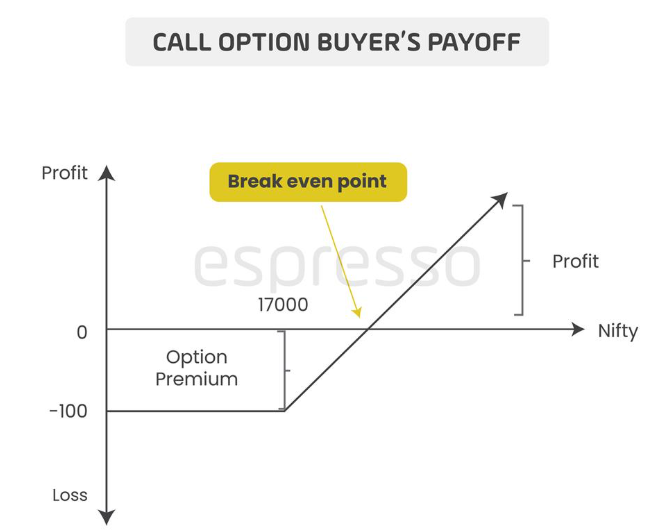
Call Option Payoff Diagram
The below diagram shows Call Option Payoff Diagram
Graphical Representation Of Profit And Loss
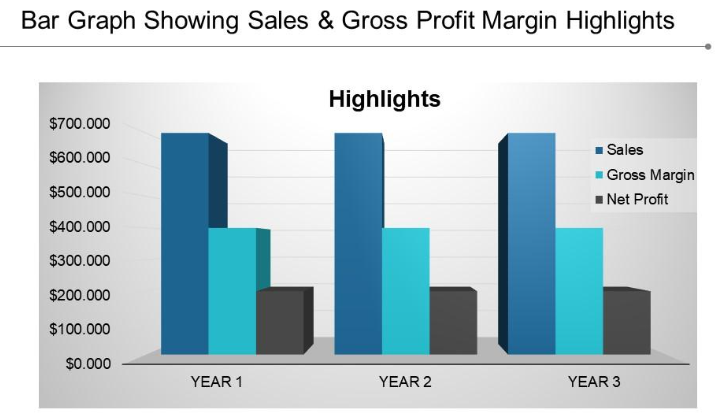
The below shows Graphical Representation Of Profit And Loss
Break-Even Point Calculation
The break-even point for a call option is calculated by adding the strike price to the premium paid. It tells you the price the underlying asset must reach for the buyer to avoid a loss.
Formula:
Break-Even = Strike Price + Premium Paid
For example, if a trader buys a call option with a strike price of ₹1,000 and pays a premium of ₹50, the break-even point would be ₹1,050. The buyer only starts making a profit if the stock price exceeds ₹1,050 before expiry.
Maximum Profit And Loss Scenarios
Maximum Profit Scenario
In a call option, the maximum profit is theoretically unlimited. As the stock price rises above the break-even point, the buyer’s gain increases. The higher the price goes, the greater the potential for profit, minus the premium paid upfront.
Maximum Loss Scenario
The maximum loss for a call option buyer is limited to the premium paid. Even if the underlying stock drops to zero or stays below the strike price, the option simply expires worthless. The buyer only loses the premium, no additional capital.
Understanding Put Options
Put options give the holder the right, but not the obligation, to sell a specific asset at a predetermined strike price within a set period. They are widely used for protection against declining stock prices or for bearish speculation.
They are ideal tools in volatile markets where investors anticipate a decline in the underlying asset’s value. Traders use them for both hedging purposes and strategic profits when markets fall, making them vital for managing downside risk effectively.
Put Options Definition And Mechanics
A put option represents a contract allowing its buyer to sell the underlying stock at the strike price before or on the expiration date. It requires paying a premium to the seller for this right.
If the market price falls below the strike, the option gains value. If the price stays above the strike, the option expires worthless, and the buyer only loses the premium paid, making it a controlled-risk investment.
When To Use Put Options
Investors typically use put options when they expect the underlying asset to decline in price. It’s a protective strategy to hedge portfolios or to profit from bearish market movements without selling the actual stock.
Put options are also useful in uncertain markets where downside protection is needed. Long-term holders use them like insurance, while short-term traders leverage them to bet against overvalued stocks or weak sectors.
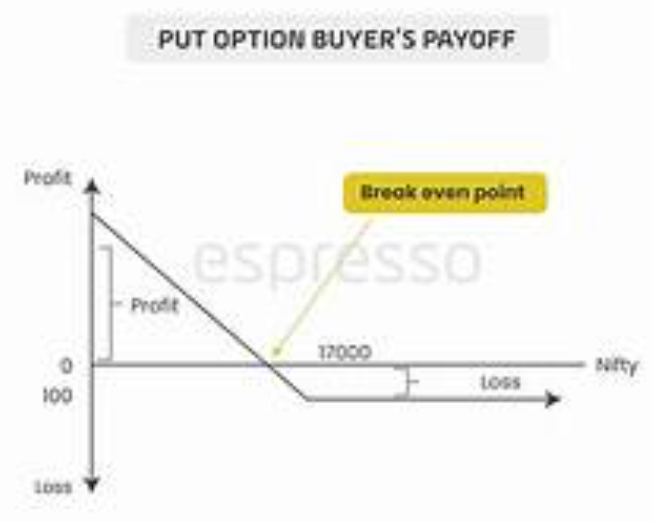
Put Option Payoff Diagram
The below chart shows Put Option Payoff Diagram
Graphical Representation Of Profit And Loss
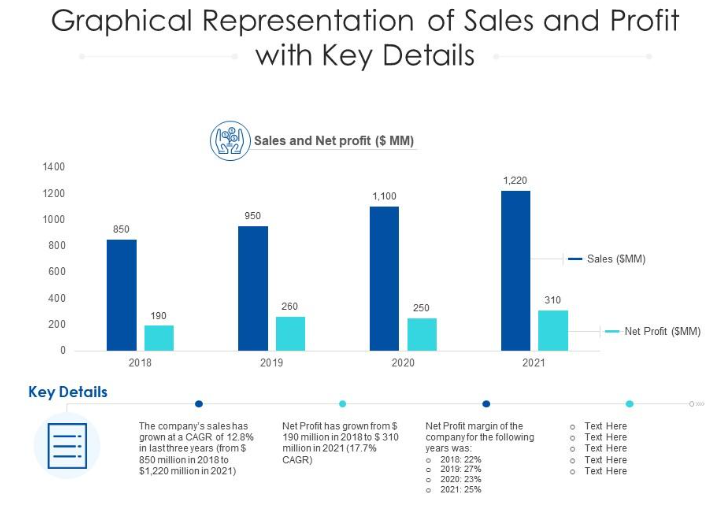
The below shows Graphical Representation Of Profit And Loss
Break-Even Point Calculation
The break-even point in a put option trade is the price at which the investor recovers the premium paid. To calculate it, subtract the premium from the strike price.
Formula:
Break-Even Point = Strike Price – Premium Paid
For example, if you buy a put option with a strike price of ₹200 and pay a premium of ₹10, your break-even point is ₹190. If the stock falls below ₹190, the trade becomes profitable. If it stays above ₹190, you incur a loss equal to the premium.
Maximum Profit And Loss Scenarios
Maximum Profit Scenario – Call Option Buyer
When you buy a call option, you expect the price of the stock to rise. If it rises above the strike price + premium paid, you start making a profit.
Formula:
Maximum Profit = Unlimited
(Because the stock price can rise indefinitely)
Example:
If you buy a call with a strike price of ₹1,000 and pay a ₹50 premium, then:
If stock rises to ₹1,100 → Your profit = ₹1,100 – ₹1,000 – ₹50 = ₹50
If stock rises to ₹1,200 → Your profit = ₹1,200 – ₹1,000 – ₹50 = ₹150
And so on…
Maximum Loss Scenario – Call Option Buyer
If the stock stays below or at the strike price, the option expires worthless. You lose only the premium paid.
Formula:
Maximum Loss = Premium Paid
Example:
You bought a call at strike price ₹1,000, premium ₹50.
If stock stays at ₹950, ₹900 or even ₹0 → You lose ₹50 only.
No further loss beyond the premium.
Call Vs Put Options Difference
The main difference between call and put options lies in their rights and obligations, market outlook suitability, and risk and reward profiles. Calls grant the right to buy in bullish markets; puts grant the right to sell in bearish trends, offering strategic versatility and defined risk.
Key Differences
Rights And Obligations
Call option buyers have the right to buy, while put buyers have the right to sell—no obligation exists unless exercised. Sellers, however, have the obligation to fulfill the contract if exercised, making their risk and responsibility significantly higher.
Market Outlook Suitability
Calls suit bullish outlooks where price is expected to rise, while puts are ideal for bearish views when prices are likely to fall. Each option type aligns with different investor sentiments, making them flexible tools to express market direction with limited capital.
Risk And Reward Profiles
Buyers of both calls and puts face limited loss only the premium. Their reward is potentially unlimited for calls and significant for puts. Sellers, in contrast, assume higher risk for fixed rewards, making reward-to-risk ratios favorable for buyers and cautious for sellers.
Strategic Applications
Strategic applications of options involve combining calls and puts to build strategies like straddles, spreads, and protective puts. These are widely used in Indian stock market scenarios to manage volatility, hedge portfolios, or profit from directional moves, offering tailored solutions across various market conditions.
Combining Calls And Puts For Various Strategies
Combining calls and puts allows traders to create powerful strategies like straddles, strangles, spreads, and collars. These strategies help manage risk, capture profits in volatile or neutral markets, and adapt to different expectations by balancing potential gains and losses within a defined range of outcomes.
Use Cases In Indian Stock Market Scenarios
The main use cases in Indian stock market scenarios include hedging portfolios using Nifty or Bank Nifty options, protecting against earnings volatility, and executing directional trades. Retail investors and institutions apply these strategies to manage risk, enhance returns, and navigate rapidly changing market conditions effectively.
- Hedging with Index Options: The main use case is using Nifty and Bank Nifty options to hedge against market downturns. Investors protect portfolio value by buying puts, especially during earnings seasons or macroeconomic uncertainties, ensuring limited downside exposure.
- Earnings Volatility Protection: Traders use options to safeguard against stock price swings around earnings announcements. By purchasing straddles or strangles, they profit from sharp movements, regardless of direction, minimizing risk while staying active in volatile trading conditions.
- Directional Trades and Speculation: Investors with strong market views use calls for bullish bets and puts for bearish ones. In Indian markets, stocks like Reliance or TCS are often traded through options to capitalize on expected price movements.
- Generating Income with Spreads: Traders use vertical spreads or iron condors on stable stocks to earn premiums. In low-volatility markets, this strategy helps generate consistent returns with limited risk, especially using liquid options like HDFC Bank or Infosys.
Call And Put Option Examples
Call Option Example
Suppose a trader believes the Nifty Index, currently at ₹22,000, will rise. He buys 1 lot of Nifty Call Option with a strike price of ₹22,100 expiring in one week, paying a premium of ₹100 per unit. Since 1 lot = 50 units, total premium = ₹5,000.
Scenario With Nifty Index
If by expiry, Nifty rises to ₹22,400, the call becomes profitable. The buyer now has the right to buy Nifty at ₹22,100 and can immediately sell it at ₹22,400 in the market, earning a profit per unit.
Calculating Profits And Losses
- Strike Price = ₹22,100
- Premium Paid = ₹100 per unit
- Market Price at Expiry = ₹22,400
- Intrinsic Value = ₹22,400 – ₹22,100 = ₹300
- Profit per Unit = ₹300 – ₹100 = ₹200
- Total Profit = ₹200 x 50 = ₹10,000
If Nifty stays below ₹22,100, the option expires worthless, and the maximum loss is limited to ₹5,000 (premium paid).
Put Option Example
Suppose, an investor holds 100 shares of Infosys trading at ₹1,450 each. Fearing a short-term decline, she buys a put option with ₹1,400 strike price at a premium of ₹25 per share. Total premium = ₹2,500.
Scenario With A Specific Stock
If Infosys drops to ₹1,300, the put option gains value. She can now sell her shares at ₹1,400 instead of the current ₹1,300, protecting her investment and reducing the downside impact significantly.
Calculating Profits And Losses
- Strike Price = ₹1,400
- Premium Paid = ₹25
- Market Price at Expiry = ₹1,300
- Intrinsic Value = ₹1,400 – ₹1,300 = ₹100
- Profit per Share = ₹100 – ₹25 = ₹75
- Total Profit = ₹75 x 100 = ₹7,500
If Infosys stays above ₹1,400, the put expires worthless. The maximum loss remains ₹2,500, i.e., the premium paid.
Call Vs Put Options – Summary
- Options trading allows buying or selling rights to trade assets at a fixed price before a set date, offering flexibility for hedging, income, or speculation across various market conditions with managed risk exposure.
- Understanding call and put options helps investors make smarter decisions, protect portfolios, and build strategies for different market trends. It reduces costly errors and supports consistent returns by managing risks effectively through informed trading choices.
- A call option gives the buyer the right to purchase an asset at a predetermined price before expiration. The seller earns a premium and must deliver the asset if the buyer exercises the contract.
- Put options let holders sell an asset at a fixed price within a time limit. These are used to hedge against falling prices or to speculate when expecting a bearish market trend or decline in value.
- Investors use put options to protect their portfolios from losses when anticipating price declines. This allows bearish trades or hedging without selling the underlying stock, making it useful in volatile or uncertain market situations.
- The main difference is in their direction and purpose. Calls provide buying rights in bullish markets, while puts give selling rights in bearish trends, offering tools for strategic planning, defined risk, and market adaptability.
Call Vs Put Options- FAQs
What Is The Main Difference Between A Call And A Put Option?
The main difference between a call and a put option is their direction of use. Calls give the right to buy an asset at a fixed price, while puts grant the right to sell, serving opposite strategies in bullish or bearish markets.
When Should I Use A Call Option Over A Put Option?
Use a call option when you expect the underlying asset’s price to rise. It lets you profit from upward movement with limited risk. In contrast, choose a put option when expecting a price drop or seeking downside protection for held positions.
How Do Premiums Work In Options Trading?
Premiums are the price paid by the option buyer to the seller for the right granted by the contract. It’s non-refundable and represents the maximum loss for buyers. Sellers receive the premium as income but accept the obligation if exercised.
How Do Call And Put Option Payoff Diagrams Work?
Payoff diagrams visually show potential profit or loss at different price points. Call payoffs rise after the break-even point, while put payoffs increase as prices fall. The flat line before break-even indicates maximum loss, limited to the premium for buyers.
Which Is Better: Call Or Put Option For Beginners?
For beginners, call options are often easier to understand and less risky in bullish markets. They allow profit potential with limited loss. However, put options can be helpful for protection. Starting with calls in upward-trending markets is usually more intuitive.
How Do You Read A Call Vs Put Option Payoff Graph?
A call option payoff graph rises above the strike price plus premium, showing unlimited profit potential. A put option payoff rises as the price falls below the strike, showing profit in bearish markets. Flat lines before break-even show maximum loss limits.
Is Buying Call Options More Profitable Than Puts In Bull Markets?
Yes, in bull markets, buying call options is generally more profitable. They allow investors to benefit from price increases with limited capital and risk. Since prices rise in such markets, call options appreciate in value, offering better returns than puts.
Are Call And Put Options Good For Short-Term Trading?
Call and put options are well-suited for short-term trading. Their limited life span, leverage, and ability to profit from quick price movements make them ideal for tactical trades. However, they require timing accuracy, risk control, and awareness of time decay.
Disclaimer: The above article is written for educational purposes and the companies’ data mentioned in the article may change with respect to time. The securities quoted are exemplary and are not recommendatory.